Wednesday, 30 October 2013

Thriller conventions:


Thriller conventions:


Camera work;

Typical shots used;

·         mid shots

·         Close ups to show expression and what the actors are doing.


·         Close ups help create claustrophobic feel.

Composition/ framing;

·         Exclusion- builds tension, what’s happening out of the shot?

·         Camera movement angles; high/low- shows power or authority.

·         Perspective- 1st or 3rd person, empathy=1ts person


Editing;

Typical transitions;

·         Dissolve-links key events.

·         Fades to black/white- shows flashbacks or time movement

·         Quick cuts= tension

·         Non chronological= tension (from flashbacks)


Thriller opening conventions:

Titles;

·         main actors and their roles

·          directors

 Indents-film Company looks more professional.

Introduce key characters, set scene, atmosphere and plot intro- key event.


Sound;

·         Enhance plot, quickens with tension.

·         ambient music= create tension.

·         Voice over sets mood= non diegetic.


Mise-en-scene;


·         Props-foreshadow, connect with plot= guns, knives.

·         Setting= creates mood, atmosphere, realism= fits in with everything else (costumes).

·         Isolation= lets the audience know that there is no help for the victim.

·         Lighting/costume= darker- bad character.


Narrative;

·         Typical storyline- revenge, justice/ crimes

·         Flashbacks= time sequence changed


Sub-genres;


·          Supernatural- eg; Insiduous, The Exorcist

·          Action- eg; The Dark Knight, Taken


·          sci-fi -eg; Inception, District 9

·          Religious

·          film noir- Cape Fear, Psycho

·          Disaster -eg; Armegeddon, Twister

·          Political -eg; Argo, All The Presidents Men

·          Mystery

·          Medical

·          Romance -eg; True Romance, Vertigo

·          Spy -eg; North By Northwest, Casino Royal

·          conspiracy


Monday, 28 October 2013

Glossary of terms (ISL work)

Glossary of terms (ISL work)

Camera shots

Extreme long shot (ELS): to show distance, scale to give the audience a sense of location e.g.; extreme long shot over London in the film 28 days later, shows the audience how derelict the areas.

Longshot (LS): life size e.g. a shot of a person would have the whole person in shot, head and feet. this longshot from "28 days later" shows how the man is totally alone, it also shows how small he is in comparison to the rest of the landscape.


Mid shot (MS): figure from knees or waist up, usually used for dialogue shots. 

Medium close up (MCU): shows the face clearly, halfway between mid-shot and close up.

Close up: shows very little background either a face or detail of the mise-en-scene. This is an exaple of a close up from the Black swan, this close up allows the audience to see the unusual details on the face, as the girl is turning into a swan.


Extreme close up: extreme version of the close up magnifies what a human eye would see in reality. this is an example of an extreme close up in the film 28 days later, this is effective because itgives the effect that the character is being closely watched.


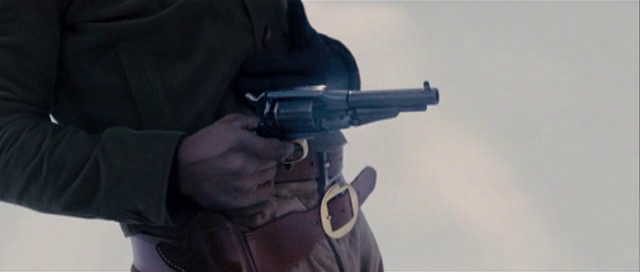
Cut away (CA): shot between action e.g. during a car chase a cut away to a conversation. Adds additional information and helps during editing. this cutaway shot from Django unchained shows additional information, that the man is prepared to fight and has a weapon ready, this is effective because this allows the director to still use a mid shot or close up on the face to create tension.

Two shot: contains two people, good for showing a relationship between characters. Creates a sense of equality between characters as they have equal prominence in the frame. This shot helps show that the two men are having a conversation, this is effective because they aren't facing each other, they are looking straight ahead, so an OSS would not be as effective.


Over the shoulder shot (OSS): framed from over the shoulder of one character looking in the direction they are. Effective during a conversation, puts the audience in the characters perspective. This OSS from Dango unchined is used to show the way the men are being forced to walk in lines, as slaves, and to show the scaring


Noddy shot: Common in interviews, usually the subject is filmed OSS or one shots for the entire interview noddies are edited in to show the interviewers reactions. This is a noddy shot from a news program, it has been used to show the reaction of the host after he has been in an interview.


Framing: Framing is what you chose to include in the shot, for example in an action scene the camera may only focus on one person rather than a whole group. this is an example of the use of framing in Django unchained, the shot picks out the man being shot off his horse, this is effective because otherwise the whole field would have been in the frame and the audience may have missed the action.